October 6, 2026
Three days on São Jorge: fajãs, coast and walking routes
Spend three days on São Jorge around Velas and the north coast, the Cubres and Caldeira de Santo Cristo fajãs, and the Calheta–Fajã dos Vimes area. Set the order around the weather and check trail conditions before planning a walk.
São Jorge rewards time spent outside the car. A viewpoint explains the shape of a fajã, but the walk down, the village and the sea give it context. This plan assumes three full days and a base around Velas or Calheta. A rental car connects the places reached by road. The Caldeira de Santo Cristo walk needs its own logistics and cannot be added as a quick driving stop.
A three-day route that leaves room to stop
Day 1 — Velas and Fajã do Ouvidor
Start in town, then explore part of the north coast. Treat a swim as weather-dependent.
Day 2 — Cubres and Santo Cristo
Give the northern fajãs a full day. If you hike, arrange the start, finish and return transport first.
Day 3 — Calheta and Fajã dos Vimes
Explore the south without turning every fajã into a short photo stop.
Use the forecast to move these days around. A clear coast does not guarantee visibility on the ridge above it.
Day 1 — Velas and the north coast
Walk through Velas before setting off. It is easier to understand the town’s scale on foot, and a late arrival may leave just enough time for this first visit. Check your collection point and parking arrangements before starting the driving route. Choose one or two northern stops rather than trying to reach every viewpoint.
The Fajã do Ouvidor viewpoint shows how lava reached the foot of the cliffs. The area around Poça de Simão Dias is known for bathing, but sea conditions and local signs decide whether swimming is appropriate. Even when it is not, the coastal geology makes this a useful stop.
Allow time for the return drive in daylight. An extra stop is worthwhile only if there is time to get out and take in the place. Keep a longer walk for the next day.
Day 2 — Cubres and Caldeira de Santo Cristo
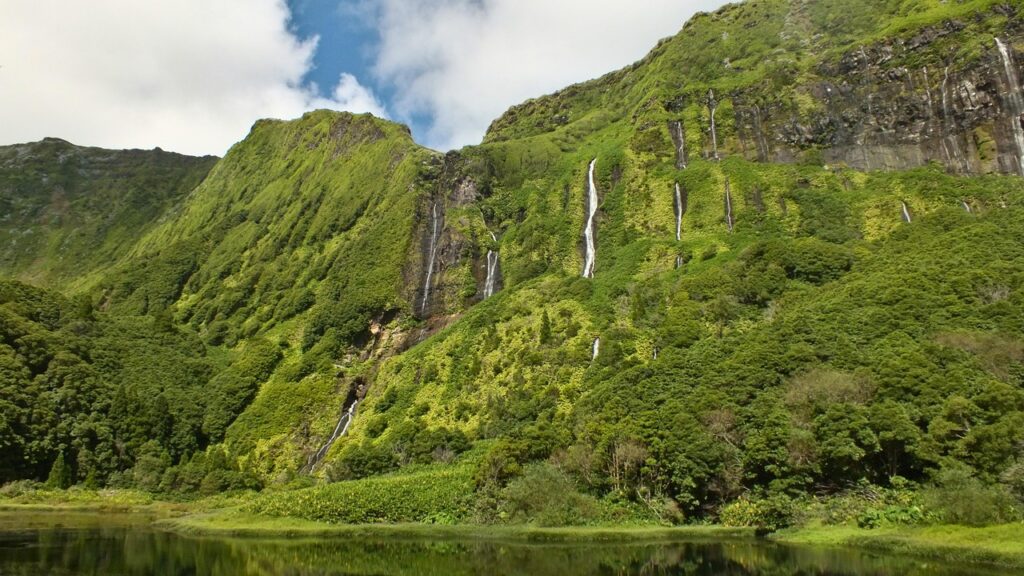
The Cubres and Caldeira de Santo Cristo fajãs sit below high cliffs on the north side. Reaching Santo Cristo involves a walking route from Cubres or Serra do Topo. Decide how you will reach the trailhead and return from the finish before starting.
The official Serra do Topo–Santo Cristo–Cubres route is for travellers prepared for a substantial walk. Check distance, descent, ground conditions, warnings and weather on the day. A car does not reach Santo Cristo, and the route does not return you automatically to the trailhead.
If walking is not part of your trip, spend longer at viewpoints and in accessible fajãs. Cubres still gives a close view of the lagoon and the coast. Respect homes and protected areas. In heavy rain or when a trail is closed, use a coastal alternative instead of finding an unmarked way in.
Day 3 — Calheta and Fajã dos Vimes
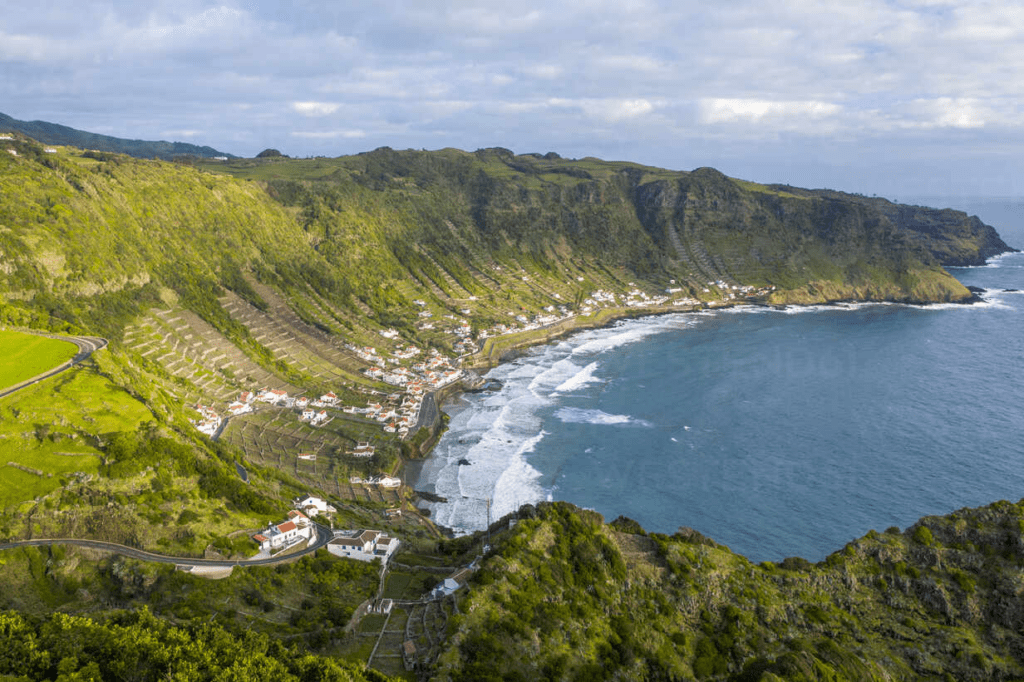
Use Calheta as the anchor for a gentler southern day. The view over Fajã dos Vimes connects the village to its steep slopes and the channel towards Pico and Faial. Local coffee growing and woven textiles add another layer to the visit when visits are available; check opening times directly.
Every descent to a fajã also means a return climb. Leave room for curves, parking and a meal. If a ferry or flight closes your trip, plan the last stop backwards from your car return time rather than crossing the island one more time.
Car, accommodation and island crossings
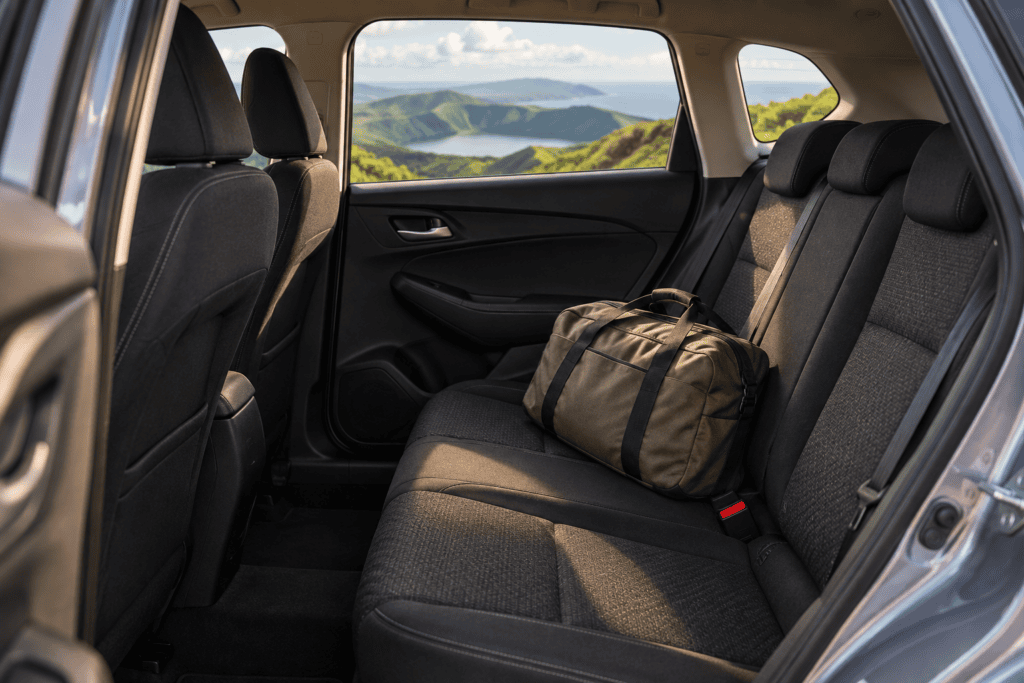
Velas and Calheta both work as bases, depending on your arrival and the places you most want to see. Choose a vehicle around passengers, luggage and transmission rather than assuming a larger car is needed for the island. It will not change pedestrian access or the rules for permitted roads.
For a trip including Pico or Faial, check ferry times, the rental contract and vehicle carriage separately. Do not assume the same car can follow you between islands. See car rental in São Jorge for collection points, categories and terms for your dates.